What Is the Difference Between Lithium-Ion and Lithium-Polymer Batteries?
Almost every smartphone carries a rechargeable battery described with one of two labels: lithium-ion or lithium-polymer. The names appear on product pages, replacement listings, and safety guides. They sound like competing technologies, and shoppers often assume one is newer or safer than the other. In practice, the relationship is closer than the marketing language suggests, and the useful differences are often about packaging, electrolyte design, shape, and the exact battery chemistry.
This article explains lithium-ion and lithium-polymer batteries without turning the topic into a chemistry exam. You will see how they store and release energy, what the words actually mean, and why a thin phone can use a battery that fits around other components. We will also examine safety, lifespan, and common myths. The goal is to help you read a specification with better judgment and understand why “polymer” is not automatically a guarantee of superior performance.
What Is a Lithium-Ion Battery?
A lithium-ion battery is a rechargeable battery that moves lithium ions between a positive electrode and a negative electrode during charging and discharging. It is a broad family rather than one exact recipe. Common positive electrode materials include lithium cobalt oxide, nickel manganese cobalt oxide, nickel cobalt aluminum oxide, and lithium iron phosphate. The negative electrode is often graphite, although silicon blends are used to increase capacity. A separator keeps the electrodes apart while allowing ions to pass through an electrolyte.
A lithium-polymer battery, often shortened to Li-poly or LiPo, is commonly a lithium-ion battery that uses a polymer or gel-like electrolyte and a soft pouch enclosure. The polymer component can reduce the need for a rigid metal can and allows a manufacturer to shape the cell more freely. Historically, “lithium polymer” referred to cells using a solid or gel polymer electrolyte, but many modern consumer cells still contain liquid electrolyte within a polymer matrix or use a pouch design.
This means there is overlap. A phone may be advertised as having a lithium-polymer battery even though its energy storage chemistry is still fundamentally lithium-ion. The better way to compare two phones is to look at cell chemistry, capacity, charging limits, thermal design, and battery management rather than treating the two labels as opposites.
How Does It Work?
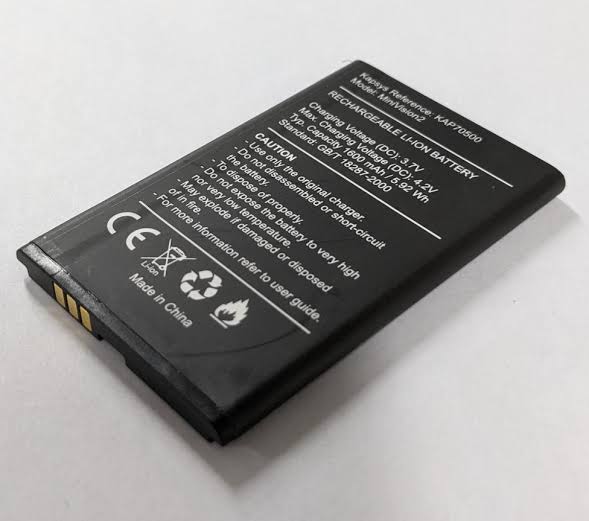
During charging, an external power source moves lithium ions from the positive electrode through the electrolyte and separator to the negative electrode. Electrons travel through the external circuit, providing current. During use, the process reverses: ions move back while electrons power the phone. The movement is not a simple free flow without limits. The battery management system controls current, voltage, temperature, and charge termination so the cell stays within safe operating conditions.
The positive and negative materials determine much of the battery’s voltage, capacity, and lifespan. A higher-capacity material may store more energy in a given mass, while another chemistry may provide longer cycle life or better thermal stability. The electrolyte allows ions to move but must remain stable across the operating range. The separator prevents direct contact between electrodes, which could cause a short circuit. Current collectors carry electricity to the battery tabs and external circuit.
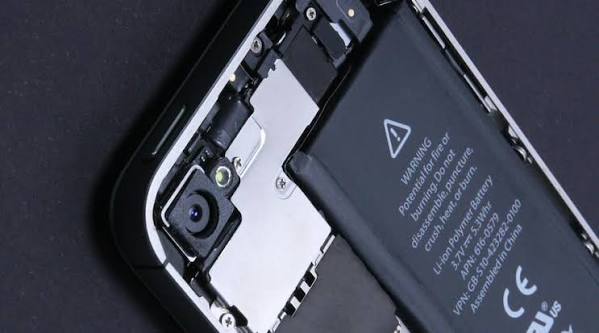
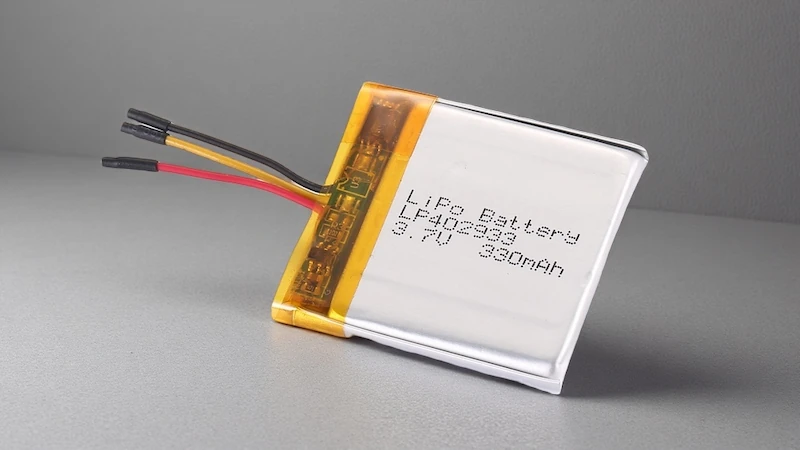
In a pouch-style lithium-polymer cell, the active materials are stacked or wound inside a thin aluminum-laminate package. The flexible package can fit into spaces that a cylindrical or hard rectangular cell cannot. That is a major reason phones use pouch cells. The freedom is mechanical, not magical. A thin pouch can still swell if gas forms, and it still needs protection from piercing, bending, and excessive heat. The phone’s rigid frame and internal supports are part of the safety design.
Key Components and Technologies
The cathode is the positive electrode and often uses a metal oxide that can host lithium ions. The anode is usually graphite, with silicon added in some cells to increase capacity. The electrolyte enables ion transport. The separator is a porous membrane that blocks electronic contact. Current collectors and tabs connect the cell to the phone. A rigid or flexible enclosure holds the assembly under pressure and protects it from the environment.
The battery management system monitors voltage, current, and temperature. It balances cells when multiple cells are used, prevents overcharge and deep discharge, and estimates remaining charge. In a phone, charging behavior is also shaped by software. A phone may slow charging near full capacity, pause under high temperature, or learn a user’s routine to delay the final portion of charging. These strategies can reduce stress even when the charger and battery support fast charging.
The word polymer can refer to the electrolyte, a binder, or other materials. A pouch package is not proof that the cell has a solid polymer electrolyte. Manufacturers use different constructions, and marketing names often simplify a complicated stack. If a replacement battery is being purchased, the physical dimensions, voltage, connector, capacity, and compatibility matter more than a broad label. An incorrectly fitted pouch cell can be dangerous even if the chemistry is nominally the same.
Real-World Applications
Smartphones favor pouch lithium-ion or lithium-polymer cells because they can be shaped around cameras, speakers, and cooling hardware. Wearables use small cells with similar principles. Tablets, laptops, wireless earbuds, and power banks rely on the same family of rechargeable storage, although their packaging and management systems differ. Electric vehicles often use cylindrical or prismatic cells and may use different cathode chemistries because their priorities include cycle life, cost, and crash protection.
In a phone, energy density affects thickness and weight. A larger battery can improve runtime, but it also competes for space with antennas and thermal components. Charging speed affects heat, and heat affects longevity. The best design balances all of these factors. A phone with a large battery and conservative charging limits may last longer than a thinner phone that advertises very high wattage without adequate thermal control.
Consumers should use compatible chargers and avoid physically damaged cells. A swollen battery can push the screen out, crack the frame, or become a fire risk. Stop using the phone, do not puncture the battery, and seek professional replacement. Recycling is important because batteries contain valuable materials and should not be placed in ordinary household waste.
Advantages and Limitations
Lithium-ion and lithium-polymer cells offer high energy density, low weight, and good charge efficiency compared with older rechargeable technologies. They have no strong memory effect in normal use, so partial charging is usually acceptable. Pouch designs can fit unusual spaces, which is valuable in slim electronics. Mature manufacturing and management systems make them practical for billions of devices.
The limitations include aging, temperature sensitivity, and safety risk if damaged or abused. Capacity falls gradually as the cell is cycled and exposed to heat. Very fast charging can increase stress if the battery and thermal system are not designed for it. Pouch cells can swell, and hard metal cells have their own mechanical and venting considerations. “Lithium-polymer” is not inherently fireproof, and “lithium-ion” is not one uniform chemistry.
Cost and lifespan also depend on materials. A high-energy cobalt-rich cell may behave differently from a lower-energy but longer-lived chemistry. The battery management system can compensate for some weaknesses, but it cannot change the underlying chemistry. Buyers should look for verified capacity, charging behavior, warranty, and safety certification rather than assuming that the newer-sounding label always wins.
Frequently Asked Questions
Are lithium-polymer batteries the same as lithium-ion batteries? They are closely related. Many Li-poly phone batteries are lithium-ion cells with a polymer or gel electrolyte and a pouch package. The names overlap, and the exact chemistry should be checked separately.
Is lithium-polymer safer? There is no blanket answer. A well-designed cell with a good management system can be safe in either package. A damaged pouch cell can swell and become hazardous. Safety depends on chemistry, construction, protection circuitry, and use.
Do these batteries have memory effect? Normal lithium-ion and lithium-polymer cells do not have the strong memory effect associated with some older battery types. Partial charges are generally fine, although frequent extreme heat and very deep discharge can increase aging.
Can I replace a lithium-ion cell with a lithium-polymer one? Only with a correctly specified replacement. Voltage, dimensions, connector, charging limits, and safety certification must match. Never squeeze a pouch cell into a space or bypass protection circuitry.
Conclusion
Lithium-ion is a broad rechargeable battery family, while lithium-polymer commonly describes a lithium-ion cell with a polymer or gel electrolyte and a flexible pouch package. The two are often more alike than the labels suggest. Shape, chemistry, thermal design, and battery management determine real-world performance. Look beyond the acronym, use compatible charging equipment, and treat any swollen or damaged battery as a safety issue. With that perspective, the lithium-ion versus lithium-polymer question becomes less about a winner and more about choosing the right design for a particular device.