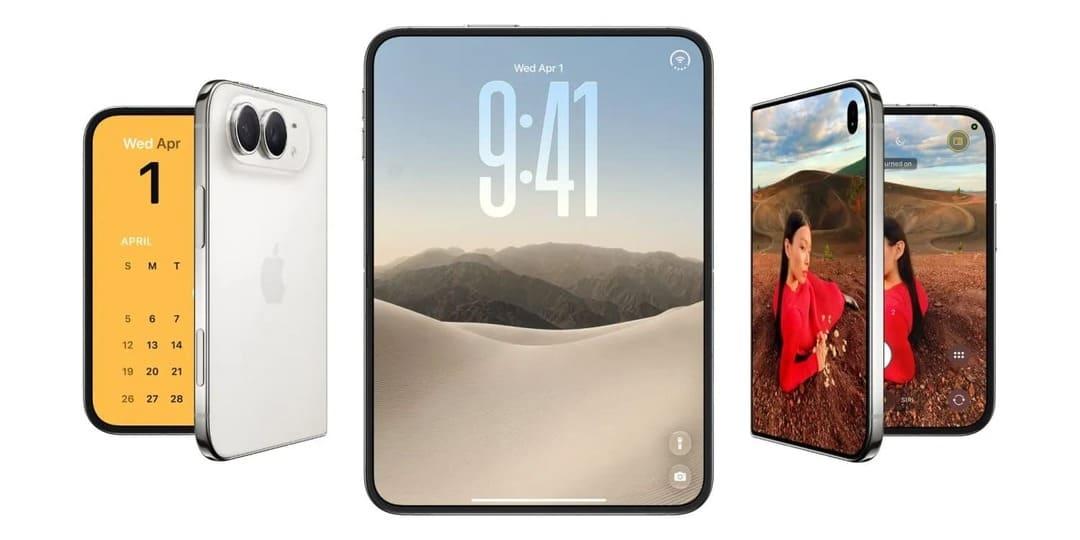
The History of Mobile Phones: From DynaTAC 8000X to iPhone Duo
The history of mobile phones is often told as a simple march from a heavy “brick” to a thin glass slab. That version leaves out the most interesting part: the phone changed shape and purpose many times because radio networks, batteries, displays, software, and user habits changed together. A mobile device has been a car-mounted radio, a status symbol, a pocket messaging machine, a camera, a personal computer, a payment terminal, and now a screen that can fold in half.
This history follows those shifts through ten representative products. Each device marks a distinct stage in the evolution of mobile phones, from the first handheld cellular phone to iPhone Duo, the newest product in this timeline at the time of writing and Apple’s first foldable iPhone. The timeline is not perfectly clean. Older technologies remained useful long after newer ones arrived, and some important ideas appeared before the public was ready for them. Looking at one product per stage makes the larger pattern easier to see: each new form factor solved a practical problem, then created new expectations that shaped the next generation.
From Car Radio Telephone to the First Handheld Cellular Phone: Motorola DynaTAC 8000X
Mobile telephone service existed long before the pocket phone. In the 1940s, radio-telephone systems connected vehicles to the public telephone network. These systems were genuinely mobile, but the equipment was expensive, power-hungry, and usually installed in a car. Only a small number of calls could operate at once because the available radio channels were limited. The idea was powerful, but the hardware was nowhere near personal.
Motorola’s DynaTAC project pushed the technology into a form a person could carry. On April 3, 1973, Motorola engineer Martin Cooper made a public call from a handheld cellular prototype on a New York City street. The device was not a finished consumer product, but the demonstration proved that a portable cellular phone was possible. The commercial Motorola DynaTAC 8000X followed in 1983 after regulatory approval. It became one of the defining symbols of the first-generation analog cellular era.
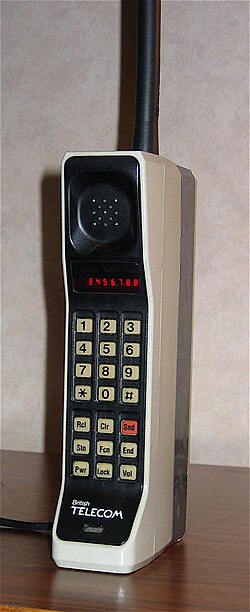
The DynaTAC 8000X was impressive because of what it could do, not because it was convenient. It was large, heavy, and expensive, with roughly half an hour of talk time and a much longer charging period. Its antenna and keypad made it unmistakably a radio device. Yet it allowed a call to happen while the user was walking, rather than sitting inside a vehicle or beside a fixed radio set. That freedom changed the basic promise of telephony.
The first handheld cellular phone also exposed the limits that would drive the next decade of engineering. Batteries needed more energy in less weight. Radios needed to become smaller and more efficient. Networks needed more capacity. Designers needed to turn laboratory and professional equipment into something a ordinary person could afford and understand. The DynaTAC did not create the smartphone, but it made the mobile phone a personal object rather than a piece of infrastructure attached to a car.
Digital Voice, Text, and the Pocket Feature Phone: Nokia 3210
The 1990s brought second-generation digital cellular networks. Digital transmission used spectrum more efficiently than analog systems, improved voice quality, and made text messaging practical. It also helped phones become smaller because radio circuits, batteries, and antennas improved. The mobile phone moved from an executive tool and luxury item toward a mass-market personal device.
Nokia’s 3210, released in 1999, captured that transition. It had an internal antenna, a compact candybar shape, predictive T9 text input, downloadable ringtones, and exchangeable covers. It was not the first phone with games or text messaging, but it packaged these features in a durable, approachable device that sold in enormous numbers. Snake became many people’s first mobile game, while SMS turned a voice device into a tool for short, asynchronous communication.
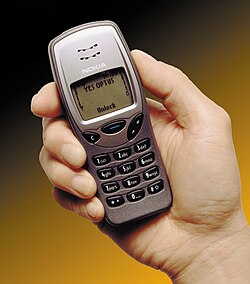
The 3210’s cultural importance came from personalization and accessibility. A phone was no longer only a piece of technical equipment. It could express taste through a cover, carry a personal address book, and become part of a social ritual. Text messaging created new habits: short greetings, abbreviations, coordination without a call, and a written form of conversation that felt different from speaking. The phone began to occupy the small spaces in daily life.
The feature-phone stage also established a tension that remains today. More functions meant more menus, more battery drain, and more reasons to look at a screen. Manufacturers responded with compact keypads and carefully limited software rather than general-purpose computers. The result was highly efficient at its specific tasks. Basic phones could last for days, survive rough handling, and make a call without asking the user to manage an operating system. That simplicity remains valuable in markets where reliability and price matter more than a large app ecosystem.
The Camera Phone Makes Every Pocket a Viewfinder: Sharp J-SH04
At the start of the 2000s, the phone began to absorb another everyday object: the camera. Digital cameras were still separate devices with lenses, buttons, and memory cards. The idea of building a camera into a phone seemed like a compromise, because early sensors were small and image quality was limited. But portability changed what photography was for. A camera that was already in your pocket could capture spontaneous moments that a dedicated camera might miss.
The Sharp J-SH04, released in Japan in 2000, is widely recognized as an early mobile phone with a built-in camera. It used a small image sensor and was tied to Japan’s mobile internet and picture-messaging culture. Its images were far below the quality of a dedicated digital camera, but they could be taken and shared quickly through the phone itself. The product represented a new kind of visual communication rather than a replacement for professional photography.
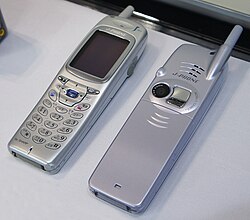
Camera phones spread rapidly. Soon, megapixel counts became a marketing battleground, and phones gained autofocus, flashes, front cameras, video recording, and software filters. The social impact was large. People began documenting daily life, sharing images instantly, and treating the phone as an always-available visual notebook. News photography became more participatory as eyewitnesses could send images from events before traditional crews arrived.
The camera-phone stage also introduced questions that later smartphones would amplify. When every device can record, what counts as private space? How are images stored, copied, and shared? Does a convenient camera improve memory, or does the act of photographing change the experience? The technology made image-making ordinary, but it did not settle the social rules around it. Subsequent improvements in sensors and software would make those questions even more important.
Mobile Email and the QWERTY Workphone: BlackBerry 6210
While consumers were discovering text messages and camera phones, another group wanted the office to travel with them. Laptop computers were becoming more portable, but opening a laptop during a commute or a meeting was not always practical. The mobile phone’s small screen and numeric keypad were poorly suited to long messages. A new form factor, built around a wide keyboard and continuous email access, emerged to fill that gap.
The BlackBerry 6210, introduced in the early 2000s, combined phone service with a full QWERTY keyboard, a compact landscape display, and push email. Instead of manually checking for messages, users could receive work email as it arrived. The device became a symbol of mobile productivity, especially in companies that valued immediate response. Its thumb-operated interface and secure messaging system created a distinct way of working.
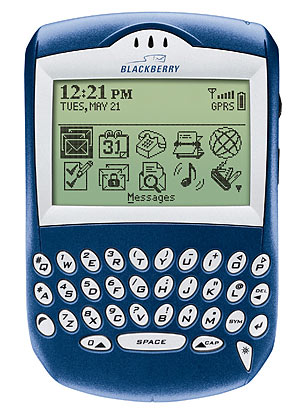
BlackBerry’s impact was less about making phones beautiful than about changing expectations for response time. Work and personal time became harder to separate when email could reach a pocket at any hour. The full keyboard made long written communication practical, and the device created a loyal culture around mobile messaging. It also showed that phone software could be designed around a specific professional workflow, rather than trying to reproduce every office task.
The QWERTY era was eventually displaced by touchscreens, but it left an important lesson. A mobile device succeeds when its hardware, software, and communication model fit one another. BlackBerry phones were exceptional at email, messaging, and structured business tasks. They became less competitive as phones turned into general-purpose media and application platforms. The workphone stage did not disappear; its functions were absorbed into smartphones, and the physical keyboard became a specialist feature rather than the default.
The Touchscreen App Platform: Apple iPhone
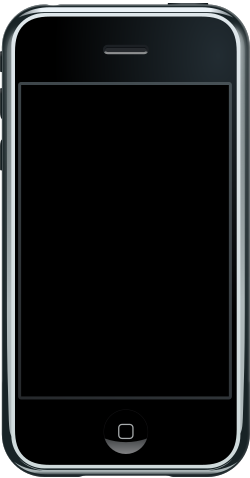
By the mid-2000s, phones had color screens, cameras, music players, web browsers, and calendars. The problem was that these features often felt like separate tools squeezed into a keypad-driven device. Menus were nested, controls were inconsistent, and the small screen limited what software could show. Apple’s iPhone, announced in January 2007 and released later that year, proposed a different organizing principle: a large multitouch display controlled directly by fingers.
The original iPhone was not the first touchscreen phone, and it did not launch with an app store. Its importance came from the combination of a capacitive multitouch display, a software keyboard, a capable mobile browser, media playback, and an interface designed around direct manipulation. The phone presented the screen as the main surface of the device. Users could pinch, scroll, and tap without a stylus or a fixed row of hardware buttons.
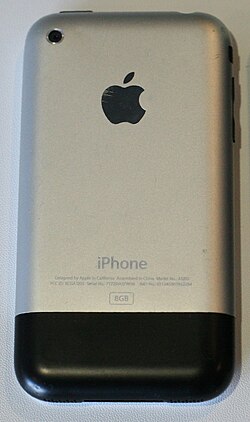
The App Store, introduced in 2008, turned the iPhone into a platform. Independent developers could distribute software to a large audience, and users could add functions that were not present at purchase. This changed the economic structure of mobile phones. The value of a device was no longer fixed at launch; it could grow through updates and third-party applications. Touch interfaces also changed design language across the industry, although the physical keyboard remained valuable for some users.
The smartphone era made the phone a general-purpose computer. Navigation, social networking, banking, music, photography, and work tools converged on one screen. That convenience created a new dependence on batteries, networks, account security, and app ecosystems. The iPhone did not invent every component, but its platform model showed how a phone could become the center of a digital life. The next stages were largely attempts to make that platform bigger, faster, more visual, and more connected.
Large Screens and High-Speed Data: Samsung Galaxy S III
The early smartphone was still small enough to be used mostly with one hand. As mobile video, maps, games, and social feeds became central, the display grew. A larger screen made reading and media more comfortable, but it also changed the physical relationship between the user and the phone. The device became less like a telephone and more like a small tablet that could still make calls.
Samsung’s Galaxy S III, released in 2012, represented the mainstream arrival of the large-screen Android phone. Its display was substantially bigger than the early iPhone screens, and its software offered multitasking features and a wide choice of applications. Different regional versions supported different cellular standards, including LTE. The phone became part of a wave of devices that treated media consumption, navigation, and the mobile web as first-class activities.
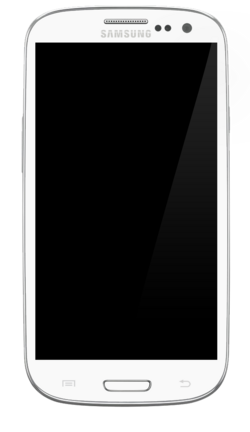
LTE made high-speed data feel normal. Streaming video, cloud storage, map updates, photo uploads, and always-connected social apps became less frustrating. The larger screen and faster network reinforced one another: a better display made video worth watching, and a better connection made more video available. The phone became the screen people used while commuting, waiting, exercising, and lying in bed. That shift affected television, music, retail, and advertising.
The Galaxy S III also showed how quickly Android’s ecosystem could serve many price points and designs. While Apple pursued a tightly controlled hardware and software experience, Android manufacturers competed on screen size, camera features, battery capacity, and price. Consumers gained choice, but they also had to navigate inconsistent update schedules and very different hardware quality. The large-screen smartphone stage established the basic slab form that still dominates the market today.
Computational Photography and the Software Camera: Google Pixel 3
For years, phone-camera progress was measured by hardware numbers: more megapixels, more lenses, larger sensors, and brighter apertures. Those improvements mattered, but a phone has less room for optics than a dedicated camera. The next stage of camera history came from using powerful processors and machine learning to combine multiple exposures, reduce noise, recognize subjects, and reconstruct detail.
Google’s Pixel 3, released in 2018, became a strong symbol of this approach. It relied on a relatively simple rear-camera module rather than a large cluster of lenses, but its software produced impressive results in difficult light. Night Sight used multiple frames and computational processing to brighten dark scenes while limiting noise. HDR processing balanced bright skies and shadows, and portrait effects used depth information and algorithms to separate a subject from the background.
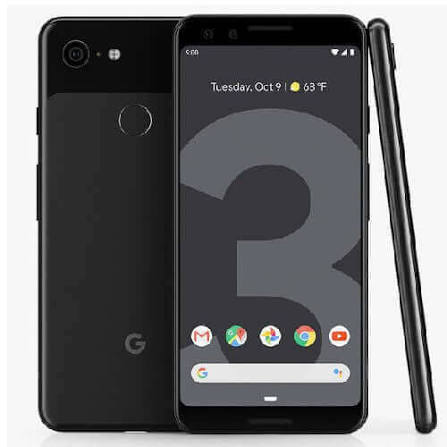
Computational photography changed the definition of a camera. The photograph was no longer just the light captured during one shutter press; it was a calculated result assembled from several frames and assumptions about the scene. This made small phone sensors more capable, but it also meant that image quality depended heavily on software, processor performance, and the manufacturer’s visual taste. Two phones with similar sensors could produce very different colors, textures, and edge details.
The social impact was immediate. More people could take usable photos in low light, at concerts, or during travel without carrying dedicated equipment. At the same time, algorithms raised questions about realism. When a camera brightens a night sky, smooths a face, or invents texture, what exactly is being preserved? Computational photography made the phone camera powerful, but it also made the phone’s interpretation of a scene part of the image.
5G and the Connected Flagship: Apple iPhone 12
By the early 2020s, the smartphone was already a mature product. Screens were large, apps were plentiful, and cameras had replaced many compact cameras. The next shift was connectivity. Fifth-generation cellular networks promised higher data rates, lower latency, and the ability to connect many devices at once. The phone could become a hub for streaming, cloud work, gaming, video calls, and connected products beyond the handset itself.
Apple’s iPhone 12, released in 2020, brought 5G support across its lineup and combined it with a new flat-edged industrial design, OLED displays, the A14 Bionic chip, Ceramic Shield glass, and MagSafe magnetic accessories. The phone was not the first 5G handset, but its scale helped make 5G a mainstream expectation. The faster network was useful on its own, yet it also fit a broader pattern: the phone became a notebook, camera, wallet, game console, and remote control for other services.
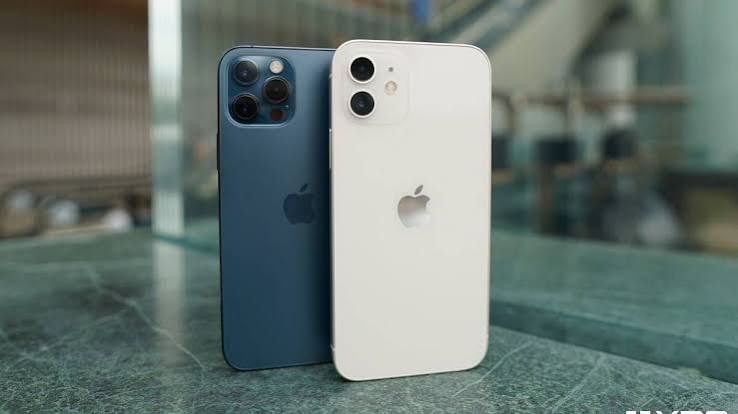
The 5G stage exposed the difference between a specification and a lived experience. Coverage varied by country and even by neighborhood. A 5G icon did not guarantee dramatic speed, and many everyday tasks worked perfectly well on 4G. Battery life and heat became more important as radios and processors handled more data. The strongest benefits appeared when networks, devices, and services improved together rather than when a phone simply carried a newer generation label.
The connected flagship also deepened dependence on cloud infrastructure. Photos, documents, messages, and entertainment could move between devices with little friction, but outages, account problems, and weak coverage became more disruptive. The phone was now a gateway as much as a device. Its history had moved from escaping the desk to becoming the control panel for a growing digital environment.
The First Practical Foldable Phone: Samsung Galaxy Fold
The smartphone slab had become remarkably efficient, but its screen was limited by the size of the device. A larger display made work and media better, yet a tablet-sized phone was difficult to carry. Engineers had experimented with flexible displays for years. The challenge was not only bending the panel; it was building a hinge, touch layer, protective cover, battery, and software experience that could survive repeated folding.
Samsung’s Galaxy Fold, announced in early 2019, was one of the first widely promoted foldable smartphones. It combined a small outer display with a much larger inner screen that opened like a book. The device promised the convenience of a phone and the workspace of a small tablet. Its launch was also marked by durability concerns around the display and hinge, which showed how difficult it was to turn a flexible prototype into a reliable everyday product.
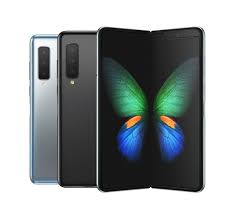
The Galaxy Fold established the central questions of the foldable era. How noticeable is the crease? How many folds can the hinge survive? Does the outer screen feel useful when the phone is closed? Can apps adapt when the display changes size? Does the extra screen justify the weight and cost? These were not only engineering questions. They changed how people carried, opened, and used a phone in public.
Foldables did not immediately replace slab phones, and that is part of their historical importance. They created a premium category where manufacturers could test new materials and software behaviors. The category gradually improved with thinner hinges, stronger cover glass, better crease control, and more sophisticated multitasking. The foldable stage proved that the shape of the smartphone was not final, even if the slab remained the best solution for most buyers.
Foldables Reach the Mainstream Platform: iPhone Duo
By the mid-2020s, foldables had moved from fragile experiments to a recognizable product category, but they remained a niche compared with conventional smartphones. Apple’s entrance changed the scale of the conversation. Apple announced iPhone Duo in September 2026 as its first foldable iPhone. The official product page describes it as a phone that becomes the thinnest iPhone with its largest display when opened, while retaining a useful outer screen when closed.
iPhone Duo uses a book-style folding design with a 7.6-inch inner OLED display and a 5.4-inch outer OLED display. Apple says the inner screen is 50 percent larger than the iPhone 18 Pro Max display and that the outer screen provides more than 90 percent of the screen area of an iPhone 18 Pro. The device measures 5.2 millimeters when open and 11.3 millimeters when closed, and it weighs 254 grams. Its titanium frame and hinge cover are part of the effort to make a folding phone feel durable rather than like two separate halves.
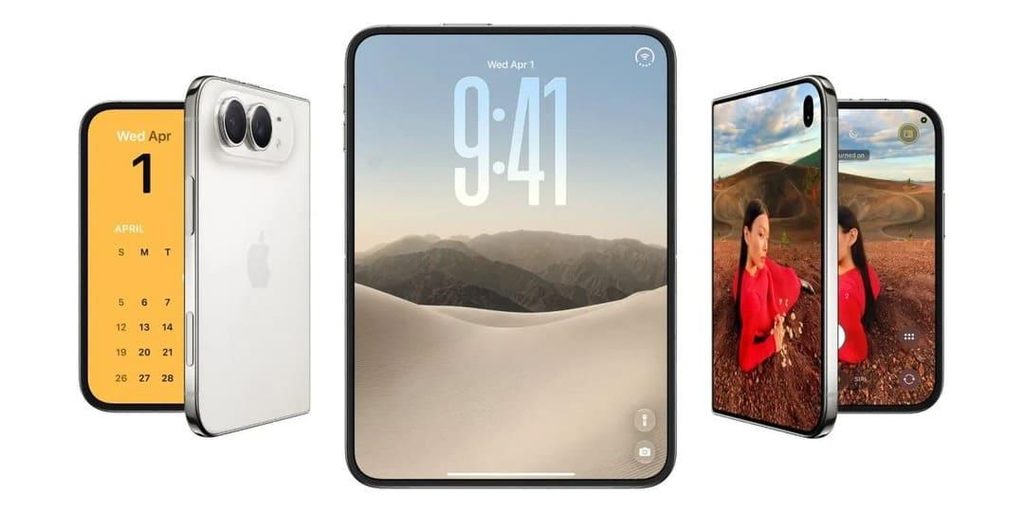
The engineering inside is equally important to the form. Apple lists a vapor-cooled A20 Pro chip, a 48MP Dual Fusion camera system, dual internal lithium-ion batteries, and dual eSIM support with no physical SIM tray. The inner-display battery estimate reaches up to 31 hours of video playback, while the outer display can reach up to 44 hours under Apple’s stated test conditions. Fast wired charging is rated at up to 50 percent in around 20 minutes, according to the official specifications.
The software story matters as much as the hardware. A folding screen is useful only if apps adapt to different postures, orientations, and screen sizes. Apple describes reimagined iOS experiences for the device’s changing shapes, including ways to use the larger canvas while open and the more compact screen while closed. This is the same challenge Samsung faced with the Galaxy Fold, but Apple is solving it inside a platform used by a very large app ecosystem.
iPhone Duo does not erase the earlier stages of mobile history; it combines them. The radio heritage of the DynaTAC remains, but the device is also a camera, a messaging terminal, a map, a media player, a payment tool, a mobile office, and a computer. Its folding screen is a response to a problem created by the smartphone’s own success: people want more display area without carrying a device that is always the size of a tablet. Whether the foldable form becomes the default or remains a premium choice, iPhone Duo marks the moment when the category gained the attention of a major platform owner.
What the History of Mobile Phones Tells Us
The journey from the DynaTAC to iPhone Duo is not a story of one invention replacing another. It is a chain of shifts in what people wanted from a phone. Analog cellular service made conversation portable. Digital networks made text and messages cheap and immediate. Cameras made the phone a visual recorder. Keyboards made mobile work possible. Touchscreens and app stores made the phone programmable. Larger screens, faster networks, computational photography, and folding displays each responded to a new use that the previous generation had made possible.
The same pattern appears in the social impact. Mobile phones expanded access to communication and emergency help, then became the primary internet device for many people. They created new forms of photography, commerce, navigation, and social connection. They also introduced distraction, surveillance risk, repair challenges, electronic waste, and unequal access to networks and devices. Every improvement in convenience carried a tradeoff in attention, cost, privacy, or environmental impact.
The most useful way to understand phone history is to look at the relationship between form and function. A product succeeds when its physical design, radio technology, battery, software, and social use fit together. The slab phone became dominant because it was a strong compromise. Foldables are an attempt to loosen that compromise by giving the screen another dimension. iPhone Duo is not the end of the story; it is the latest evidence that the phone is still evolving.